

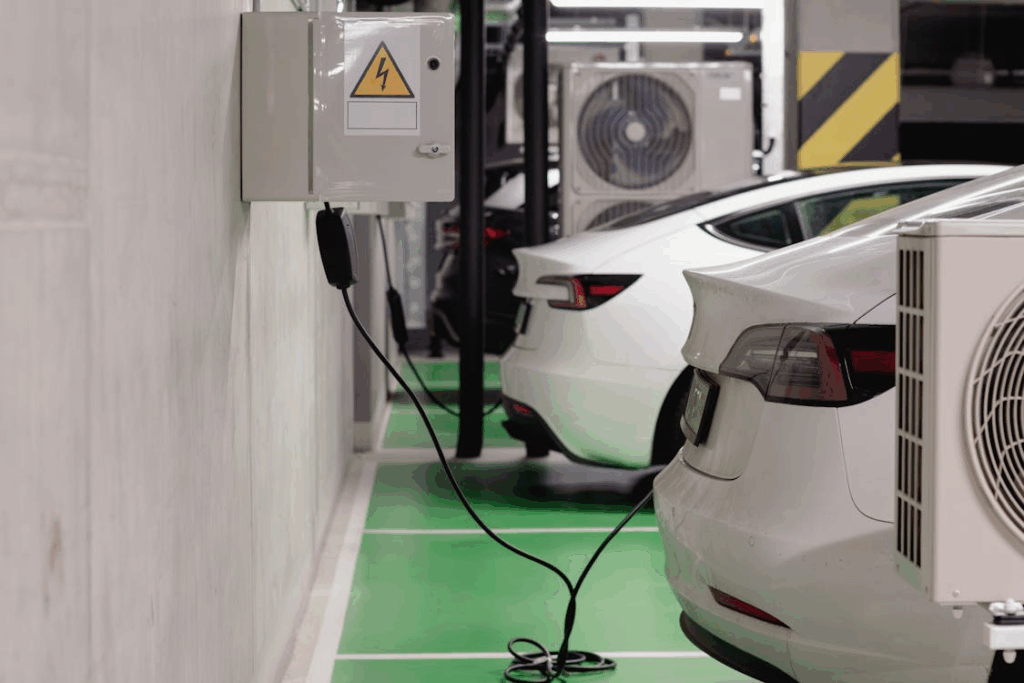
Electric vehicles promise clean transportation and reduced emissions, but their success depends on more than the vehicles themselves. The global charging network, electricity grid capacity, and the realities of charging speed all determine how practical EVs are for most drivers.
If you live in a major city, you may see charging stations on every corner. But what if you live outside an urban area? What if your local grid struggles during heatwaves or winter peaks? The question every potential EV buyer should ask is simple: Is an EV realistic for your region?
Charging Infrastructure: Still Catching Up
The number of electric vehicles on the road has grown much faster than the number of public charging stations. Many countries are struggling to expand their networks quickly enough to keep up with new EV registrations.
According to the International Energy Agency (IEA), the world had about 2.7 million public charging points by 2023, up from 1.8 million the year before. While this growth is impressive, the IEA notes that most of these chargers are located in China, Europe, and a few U.S. states, leaving large regions underserved.
The problem is more than the number of chargers. Their distribution and speed also contribute to the challenges. In many areas, public charging networks are concentrated in cities, while rural or suburban regions lag behind. Fast chargers (those that can add significant range in less than 30 minutes) make up only a small share of all chargers. This imbalance means that EV adoption in less urban areas is still impractical for many drivers.
Grid Demand: The Hidden Strain
Electric vehicles shift the emissions problem from the tailpipe to the power grid. As more EVs plug in, the demand for electricity rises, especially when many vehicles charge during the same peak hours.
The U.S. Department of Energy released a 2024 report warning that large-scale EV adoption could strain the existing grid infrastructure. It found that charging demand may require significant upgrades to transformers, substations, and distribution lines in order to maintain reliability.
A 2025 MDPI study confirmed that widespread charging can cause transformer overload, voltage imbalance, and local congestion in power networks if not properly managed. These issues become worse during heatwaves or cold snaps when grid demand is already high.
The challenge is especially acute in regions that still rely on fossil fuels for power generation. If the electricity powering an EV comes from coal or oil, the environmental benefits are reduced, and the grid faces both higher demand and higher emissions.
Ask yourself: if your local grid struggles during summer air conditioning peaks, how will it handle thousands of new EVs plugging in at night?
Charging Time and Range Anxiety
Another practical limitation is time. Filling a gasoline car takes five minutes. Charging an electric vehicle can take anywhere from 30 minutes to several hours, depending on the charger type and vehicle model.
A Harvard Business School report from 2024 noted that the United States had around 64,000 public charging stations across the country, but not all are fast chargers. Many are slower “Level 2” stations that can take hours to provide a full charge.
For city commuters with access to home or workplace charging, this may be manageable. For long-distance travelers or those living in apartments without dedicated parking, the inconvenience becomes clear. This is where range anxiety, which is the fear of running out of charge before reaching a station, remains one of the biggest obstacles to EV adoption.
Even when public chargers are available, they are not always operational. Maintenance issues, software glitches, and network outages are common complaints among EV drivers. These factors add uncertainty and frustration to road trips or longer journeys.
Public Charger Availability and Accessibility
Infrastructure growth is not just about quantity, sure, but it is also about equitable access. Urban centers often receive most of the investment, while rural or lower-income communities are left behind.
A 2024 European Alternative Fuels Observatory study found that although the European Union had more than 630,000 public charging points by 2024, only about 13.5 percent were fast chargers. Moreover, the majority of those chargers were concentrated in Western Europe.
This pattern repeats globally. In the United States, over 60 percent of public chargers are located in just five states: California, New York, Florida, Texas, and Massachusetts. Many other states still have limited infrastructure, particularly in rural areas where drivers depend on long-range travel.
Accessibility is also a concern. Some public chargers are located in gated parking lots, private businesses, or restricted-use zones, reducing their availability to general drivers. For EV adoption to grow beyond cities, charging infrastructure needs to be convenient, accessible, and reliable for everyone.
Real-World Power Grid Constraints
Beyond the availability of chargers, the grid itself must evolve to handle new demand patterns. Widespread home charging could shift energy demand into nighttime hours, but even then, utilities may face significant challenges.
The U.S. Department of Energy’s 2024 grid impact report estimated that each million new EVs on U.S. roads could add up to 30 terawatt-hours of annual electricity demand, which is roughly equivalent to the yearly power use of 2.5 million homes.
To accommodate this increase, utilities must modernize aging infrastructure, expand renewable capacity, and implement smart-grid technologies that balance loads more effectively. Until these upgrades are widespread, grid reliability will remain a barrier to seamless EV adoption.
In developing countries, where blackouts and unstable voltage are already common, large-scale EV charging could further strain limited power systems. Without robust investment, electric mobility in such regions risks being both unreliable and environmentally counterproductive.
Practical Questions Drivers Should Ask
Before deciding whether an electric vehicle is right for you, it’s worth considering how infrastructure and grid realities affect your situation.
Here are some key questions to guide your thinking:
- How many public chargers are within a reasonable distance of your home or workplace?
- Are most of those chargers fast or slow?
- How reliable is your local electricity grid?
- Do you drive long distances where charging stations may be limited?
- Can your household wiring support overnight charging if you install a home charger?
If several of these answers raise concerns, a gasoline or hybrid vehicle might remain the more practical choice for now.
EV range charging time anxiety is real and adds to the debate. Range and time matter because they directly influence convenience, which is a key factor shaing driver satisfaction and adoption rates.
Looking Ahead: Bridging the Gap
Governments and automakers are working to address these issues. The United States, for example, has committed billions of dollars to expand the National Electric Vehicle Infrastructure (NEVI) program, which aims to build 500,000 chargers nationwide by 2030. Europe and China are pursuing similar initiatives.
However, progress will take time. Building new charging stations involves coordination between governments, utilities, private companies, and landowners. Upgrading grids requires long-term investments in generation, storage, and transmission systems.
The IEA Global EV Outlook 2023 emphasizes that without coordinated planning, charging demand could outpace grid capacity, leading to reliability and cost issues. Policymakers must act quickly to balance supply and demand, or drivers may face price hikes and limited access to electricity during peak hours.
Are EVs Practical for You?
Electric vehicles are part of the future, but that future must rest on solid infrastructure and stable power systems. Today, the challenges of charging networks, grid demand, and charging time remain significant hurdles for many regions.
Before making the switch, ask yourself if your area is ready. Are there enough chargers nearby? Can the grid handle extra demand? Will long-distance travel fit easily into your lifestyle?
The promise of electric mobility depends not just on technology but on practical realities. Until charging networks and grid systems catch up, the road to full EV adoption will remain uneven.